


JDZ-10 Voltage Transformer: Accuracy Classes and Secondary Burden
JDZ-10 Voltage Transformer: Accuracy Classes and Secondary Burden Characteristics
Executive Summary
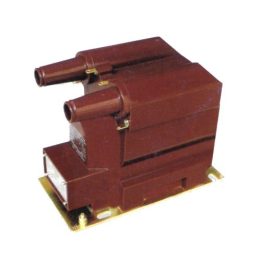
The JDZ-10 is a 10kV epoxy resin cast voltage transformer (VT) designed for indoor metering and protection applications in medium-voltage switchgear systems. This technical document provides an in-depth analysis of two critical performance aspects: accuracy class characteristics and secondary burden behavior. Understanding these parameters is essential for proper VT selection, system design, and ensuring compliance with international standards.
Accuracy class determines the maximum permissible errors in voltage ratio and phase displacement under specified operating conditions. The JDZ-10 supports multiple accuracy classes including 0.2, 0.5, 1.0 for metering applications and 3P, 6P for protection functions. Secondary burden—the load connected to the VT’s secondary winding—directly influences accuracy performance and must be carefully matched to the VT’s rated output.
This document examines the physical mechanisms governing accuracy performance, analyzes burden impact on metering and protection circuits, identifies resonance risks with capacitive loads, and provides practical engineering guidelines for optimal VT application. Engineers specifying JDZ-10 transformers will find actionable insights for ensuring reliable, accurate voltage measurement across the transformer’s operational lifetime.
Accuracy Mechanism Analysis
Voltage transformer accuracy is governed by two fundamental error components: ratio error and phase displacement. Understanding their physical origins enables engineers to predict performance under varying operating conditions and select appropriate accuracy classes for specific applications.
Ratio Error Fundamentals
Ratio error (ε) represents the percentage deviation between the actual transformation ratio and the rated transformation ratio:
ε = [(Kn × Us – Up) / Up] × 100%
Where Kn is the rated transformation ratio, Us is the secondary voltage, and Up is the primary voltage. In the JDZ-10, ratio error originates from several physical mechanisms:
- Magnetizing Current: A portion of the primary current establishes the core magnetic flux rather than being transformed to the secondary. This magnetizing component increases at lower primary voltages and introduces negative ratio error.
- Winding Resistance: Copper losses in both primary and secondary windings cause voltage drops proportional to load current. Higher burden currents amplify this effect.
- Leakage Reactance: Imperfect magnetic coupling between windings creates leakage flux, introducing additional voltage drop that varies with load power factor.
- Core Saturation: At elevated primary voltages (typically >120% rated), the epoxy resin cast core approaches saturation, dramatically increasing magnetizing current and degrading accuracy.
The JDZ-10’s epoxy resin casting provides excellent mechanical stability and environmental protection, but the core material’s magnetic properties remain temperature-dependent. At 20°C reference temperature, the transformer achieves its nameplate accuracy class. Deviations from this temperature introduce predictable accuracy shifts.
Phase Displacement Mechanisms
Phase displacement (δ) is the angular difference between the primary voltage phasor and the reversed secondary voltage phasor, expressed in minutes or centiradians:
δ = arg(Up) – arg(Us) + 180°
Phase displacement critically affects power and energy measurement accuracy, particularly in low power factor applications. The JDZ-10’s phase displacement arises from:
- Core Loss Component: Hysteresis and eddy current losses in the magnetic core create a loss angle that shifts the magnetizing current relative to the flux. This produces positive phase displacement (secondary leads primary).
- Load Power Factor: Burden power factor significantly influences phase displacement. Resistive burdens minimize phase shift, while inductive burdens increase it. Capacitive burdens can actually reduce phase displacement but introduce resonance risks discussed later.
- Winding Geometry: The physical arrangement of primary and secondary windings affects leakage reactance distribution. The JDZ-10’s concentric winding design minimizes leakage but cannot eliminate it entirely.
Accuracy Class Specifications
The JDZ-10 supports the following accuracy classes per IEC 61869-3:
| Accuracy Class | Ratio Error Limit (%) | Phase Displacement Limit (minutes) | Typical Application |
|---|---|---|---|
| 0.2 | ±0.2 | ±10 | Precision revenue metering |
| 0.5 | ±0.5 | ±20 | Commercial/industrial metering |
| 1.0 | ±1.0 | ±40 | General indication metering |
| 3P | ±3.0 | ±120 | Protection relaying |
| 6P | ±6.0 | ±240 | Fault detection protection |
Key performance notes:
- Measurement Range: Metering classes (0.2, 0.5, 1.0) maintain specified accuracy from 80% to 120% of rated primary voltage. Protection classes (3P, 6P) must maintain accuracy up to 190% rated voltage to ensure reliable fault detection.
- Burden Range: Accuracy is guaranteed when secondary burden is between 25% and 100% of rated output. Operation below 25% rated burden may degrade accuracy due to reduced damping.
- Temperature Coefficient: The JDZ-10 exhibits approximately 0.01% accuracy shift per °C deviation from 20°C reference. In typical indoor environments (-5°C to +40°C), this translates to ±0.2% additional uncertainty for class 0.2 units.
Frequency Characteristics: 50Hz vs 60Hz Operation
The JDZ-10 is primarily designed for 50Hz systems but can operate at 60Hz with modified performance characteristics:
- Magnetizing Current: At 60Hz, magnetizing current decreases by approximately 17% due to increased core reactance (Xm ∝ f). This slightly improves ratio error.
- Core Losses: Eddy current losses increase with frequency (Pe ∝ f²), while hysteresis losses increase linearly (Ph ∝ f). Net effect is modest increase in total core loss, slightly degrading phase displacement.
- Rated Output: The VA rating remains valid at 60Hz, but accuracy class verification should be performed at actual operating frequency.
For dual-frequency applications, specify the VT at the lower frequency (50Hz) to ensure adequate performance at both frequencies.
Burden Impact on Metering and Protection
Secondary burden—the total load connected to the VT’s secondary terminals—is the single most influential factor affecting in-service accuracy. Proper burden selection and management is critical for maintaining specified performance.
Burden Components and VA Rating Selection
Total secondary burden comprises:
- Meter/Relay Input Impedance: Modern electronic meters typically present 1-10 VA burden per phase. Electromechanical meters may require 15-25 VA.
- Lead Resistance: Secondary wiring contributes resistive burden calculated as I²R losses. For a 100V secondary system with 2.5mm² copper conductors over 50 meters, lead burden approximates 3-5 VA.
- Connection Hardware: Terminal blocks, test switches, and fuse contacts introduce minor additional resistance (typically <0.5 VA total).
VA Rating Selection Guideline: Select JDZ-10 rated output such that:
1.25 × Σ(Connected Burden) ≤ Rated Output ≤ 2.0 × Σ(Connected Burden)
The 1.25 safety margin accommodates future expansion and temperature variations. The 2.0 upper limit prevents operation below 25% rated burden where accuracy may degrade.
Example calculation for a class 0.5 metering application:
- Electronic energy meter: 3 VA
- Power quality monitor: 5 VA
- Lead resistance (30m, 2.5mm²): 4 VA
- Total connected burden: 12 VA
- Recommended VT rating: 15-25 VA (select 20 VA standard rating)
Burden Power Factor Effects
Burden power factor significantly influences both ratio error and phase displacement:
- Resistive Burden (PF = 1.0): Minimizes phase displacement, optimal for energy metering applications where active power measurement dominates.
- Inductive Burden (PF = 0.8 lag): Increases phase displacement in the positive direction. Most electromechanical relays present inductive burden.
- Capacitive Burden (PF = 0.8 lead): Can reduce phase displacement but introduces resonance risks (discussed below). Some electronic meters with EMI filtering present slightly capacitive input impedance.
For revenue metering applications, specify accuracy class at 0.8 lagging power factor (IEC standard test condition) to ensure conservative performance estimates.
Resonance Risks with Capacitive Burdens
Ferroresonance—a dangerous nonlinear resonance phenomenon—can occur when VT inductance interacts with system capacitance. While more common in ungrounded systems, capacitive secondary burdens can exacerbate resonance risks:
Resonance Condition:
f_resonant = 1 / (2π√(L_VT × C_burden))
When f_resonant approaches system frequency (50/60 Hz), severe overvoltages and distorted waveforms can result, potentially damaging the VT and connected equipment.
Capacitive Burden Sources:
- Long secondary cables (>100m) exhibit shunt capacitance of 100-200 pF/m
- Electronic meters with EMI filtering capacitors
- Surge protection devices on secondary circuits
Mitigation Strategies:
- Add Damping Resistor: Connect a resistive burden (5-10 VA) in parallel with capacitive loads to reduce circuit Q-factor.
- Limit Cable Length: Keep secondary wiring under 50m where possible, or use twisted shielded cable to minimize capacitance.
- Avoid Pure Capacitive Loads: Never connect power factor correction capacitors directly to VT secondary circuits.
- Use Ferroresonance Suppression: In ungrounded systems, install damping resistors or active suppression circuits across VT secondary terminals.
The JDZ-10’s epoxy resin construction provides excellent dielectric strength but does not inherently prevent ferroresonance. System-level design must address this risk.
Temperature Effects on Accuracy
Operating temperature influences VT accuracy through multiple mechanisms:
- Winding Resistance: Copper resistance increases approximately 0.4% per °C. At 60°C (typical maximum indoor temperature), resistance is 16% higher than at 20°C reference, increasing ratio error under load.
- Core Permeability: Magnetic core permeability decreases with temperature, increasing magnetizing current and degrading no-load accuracy.
- Epoxy Expansion: Thermal expansion of the epoxy casting introduces mechanical stress on the core, potentially altering magnetic properties. The JDZ-10’s casting process minimizes this effect through controlled curing.
Temperature Compensation Guideline: For critical metering applications (class 0.2) in environments exceeding 35°C, consider:
- Installing VT in temperature-controlled enclosure
- Applying temperature correction factors to metering calculations
- Selecting VT with one class better accuracy (e.g., 0.2 instead of 0.5) to provide margin for temperature-induced degradation
Application Guidelines: Metering vs Protection
JDZ-10 transformers serve both metering and protection functions, but these applications have fundamentally different requirements:
| Parameter | Metering Application | Protection Application |
|---|---|---|
| Accuracy Class | 0.2, 0.5, or 1.0 | 3P or 6P |
| Voltage Range | 80-120% rated | 5-190% rated |
| Burden Stability | Critical (constant load) | Less critical (variable load) |
| Phase Accuracy | Essential for power/energy | Moderately important |
| Saturation Point | Avoid saturation | Must survive saturation |
| Typical Burden | 10-50 VA | 50-200 VA |
Dual Secondary Configuration: For applications requiring both metering and protection, specify JDZ-10 with dual secondary windings:
- Secondary 1: Class 0.5, 20 VA for metering
- Secondary 2: Class 3P, 100 VA for protection
This configuration ensures metering accuracy is not compromised by protection circuit transients, and protection circuits maintain accuracy during fault conditions when metering circuits may saturate.
Engineering Checklist
Use this checklist when specifying and installing JDZ-10 voltage transformers:
Specification Phase
- ☐ Confirm system nominal voltage (10kV) and maximum system voltage (12kV)
- ☐ Select primary voltage rating (e.g., 10000V, 11000V)
- ☐ Select secondary voltage rating (100V, 110V, or 120V per regional standard)
- ☐ Determine accuracy class (0.2/0.5/1.0 for metering, 3P/6P for protection)
- ☐ Calculate total connected burden (meters + relays + leads)
- ☐ Select rated output (VA) with 1.25-2.0 safety margin
- ☐ Specify frequency (50Hz or 60Hz)
- ☐ Confirm installation environment (indoor, temperature range, altitude)
- ☐ Verify dimensional compatibility with switchgear enclosure
Installation Phase
- ☐ Inspect VT for shipping damage (cracks in epoxy, loose terminals)
- ☐ Verify nameplate data matches specification
- ☐ Clean terminals and apply anti-oxidation compound
- ☐ Torque connections to manufacturer specification (typically 2-3 Nm for M6 terminals)
- ☐ Route secondary cables away from high-current conductors (minimize EMI)
- ☐ Install secondary fuses (typically 6-10A for 100V systems)
- ☐ Ground VT secondary neutral point at single location only
- ☐ Label all secondary circuits clearly
Commissioning Phase
- ☐ Perform insulation resistance test (>1000 MΩ at 2500V DC)
- ☐ Verify turns ratio (within ±0.1% of nameplate)
- ☐ Measure winding resistance (compare phase-to-phase, expect <5% variation)
- ☐ Check polarity (ensure correct phasing for three-phase installations)
- ☐ Verify burden impedance matches design calculations
- ☐ Document test results for quality records
Operational Monitoring
- ☐ Schedule periodic accuracy verification (every 5 years for revenue metering)
- ☐ Monitor secondary voltage for imbalance (>2% indicates potential issues)
- ☐ Inspect terminals annually for overheating (thermal imaging recommended)
- ☐ Check for epoxy discoloration or cracking (indicates thermal stress)
- ☐ Verify burden has not changed (additional equipment may have been connected)
Standards Reference
JDZ-10 voltage transformer design, testing, and application comply with the following international and national standards:
Primary Standards
- IEC 61869-3: Instrument transformers – Part 3: Additional requirements for inductive voltage transformers. Defines accuracy classes, test methods, and performance requirements.
- IEC 60044-2: Predecessor to IEC 61869-3, still referenced in some regional specifications.
- GB/T 20840.3: Chinese national standard for voltage transformers, harmonized with IEC 61869-3.
Application Standards
- IEC 60364-6: Low-voltage electrical installations – Part 6: Verification. Includes requirements for instrument transformer installation verification.
- IEEE C57.13: Standard requirements for instrument transformers (North American standard, useful for comparison).
- OIML R 92: International recommendation for revenue metering accuracy, specifies VT accuracy requirements for billing applications.
Safety Standards
- IEC 60694: Common specifications for high-voltage switchgear and controlgear standards.
- IEC 60255-27: Electrical relays – Part 27: Product safety requirements.
- GB 311.1: Insulation coordination for high-voltage equipment (Chinese standard).
Accuracy Class Definitions (per IEC 61869-3)
- Class 0.2: Ratio error ±0.2%, phase displacement ±10 minutes. For precision revenue metering where billing accuracy is critical.
- Class 0.5: Ratio error ±0.5%, phase displacement ±20 minutes. For commercial and industrial metering applications.
- Class 1.0: Ratio error ±1.0%, phase displacement ±40 minutes. For general indication and non-billing metering.
- Class 3P: Ratio error ±3.0%, phase displacement ±120 minutes. For protection relaying where accuracy during faults is essential.
- Class 6P: Ratio error ±6.0%, phase displacement ±240 minutes. For basic fault detection and indication.
Testing Requirements
Factory testing per IEC 61869-3 includes:
- Ratio and phase displacement verification at 80%, 100%, and 120% rated voltage
- Accuracy verification at 25%, 100%, and rated burden
- Lightning impulse withstand test (75kV peak for 10kV systems)
- Power frequency withstand test (28kV for 1 minute)
- Partial discharge measurement (<10 pC at 1.2 × Ur)
- Temperature rise test (verify <65K winding temperature rise at rated burden)
Compliance Documentation
Each JDZ-10 unit should be supplied with:
- Factory test certificate with actual ratio and phase displacement data
- Nameplate with all rated characteristics
- Installation and maintenance manual
- Declaration of conformity to applicable standards
For revenue metering applications, retain test certificates for the operational lifetime of the VT to support accuracy verification and regulatory compliance audits.
Conclusion
Proper understanding and application of JDZ-10 voltage transformer accuracy classes and burden characteristics ensures reliable, accurate voltage measurement for both metering and protection functions. Key success factors include:
- Selecting appropriate accuracy class for the application (0.2/0.5 for metering, 3P/6P for protection)
- Calculating total burden accurately and selecting VA rating with proper safety margin
- Avoiding resonance conditions through proper burden power factor management
- Accounting for temperature effects in critical applications
- Following systematic installation and commissioning procedures
By adhering to the guidelines in this document and applicable international standards, engineers can maximize JDZ-10 performance and ensure long-term measurement accuracy in 10kV medium-voltage distribution systems.
- Troubleshooting Techniques for Burnt Voltage Transformers
- CT Saturation Impact on Protection Relay Accuracy During Fault Currents
- Causes, and Solutions for Abnormal Heating in 10KV Current Transformers
- LJM Series Busbar-Type Zero-Sequence CTs: Ground Fault Detection
- Combined Transformer Interface Matching with Switchgear: Critical Dimension Control for Compact Installation
- Transformateurs Combinés | Applications et Maintenance