Overview
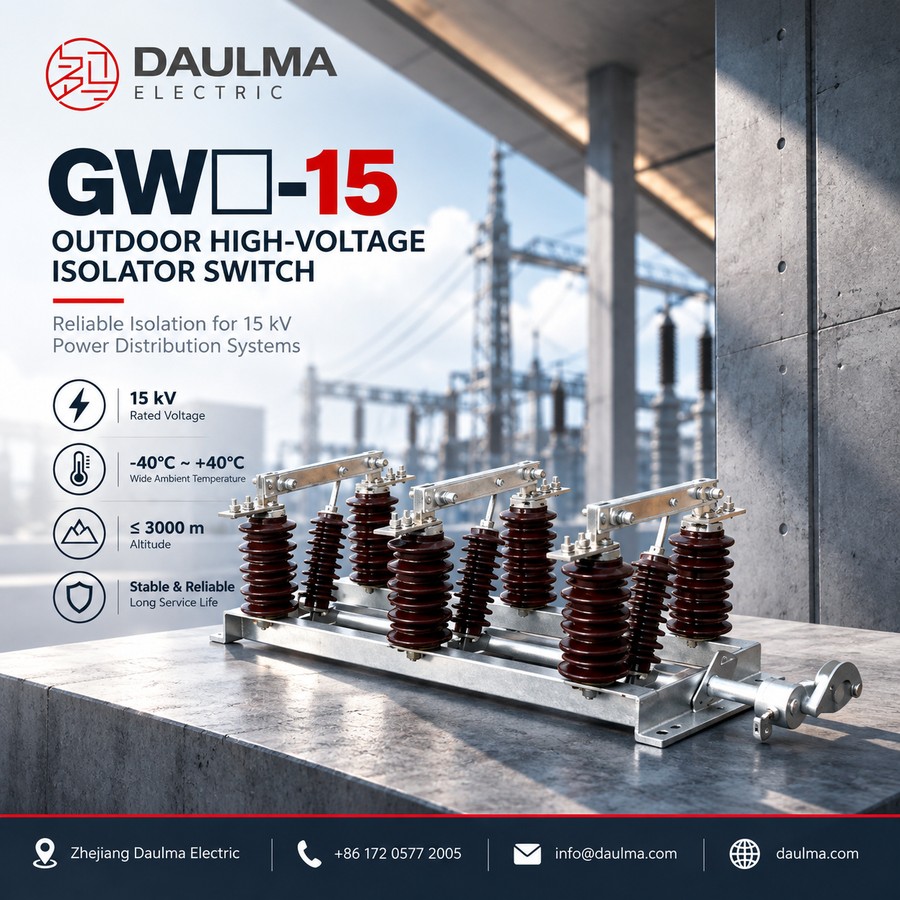
The GW□-15 is a single-pole, horizontal-rotation outdoor AC high voltage disconnector for three-phase 50 Hz networks rated 15 kV and 40.5 kV, with 630 A or 1250 A ratings. It switches no-load circuits under voltage and, with the associated circuit breaker, provides a clearly visible insulating break for safe isolation.
This page covers the standard type without an earthing switch; D1/D2 earthing versions with a CS6 manual interlock, and a pollution-proof version for heavily polluted sites, are offered within the same disconnector range.
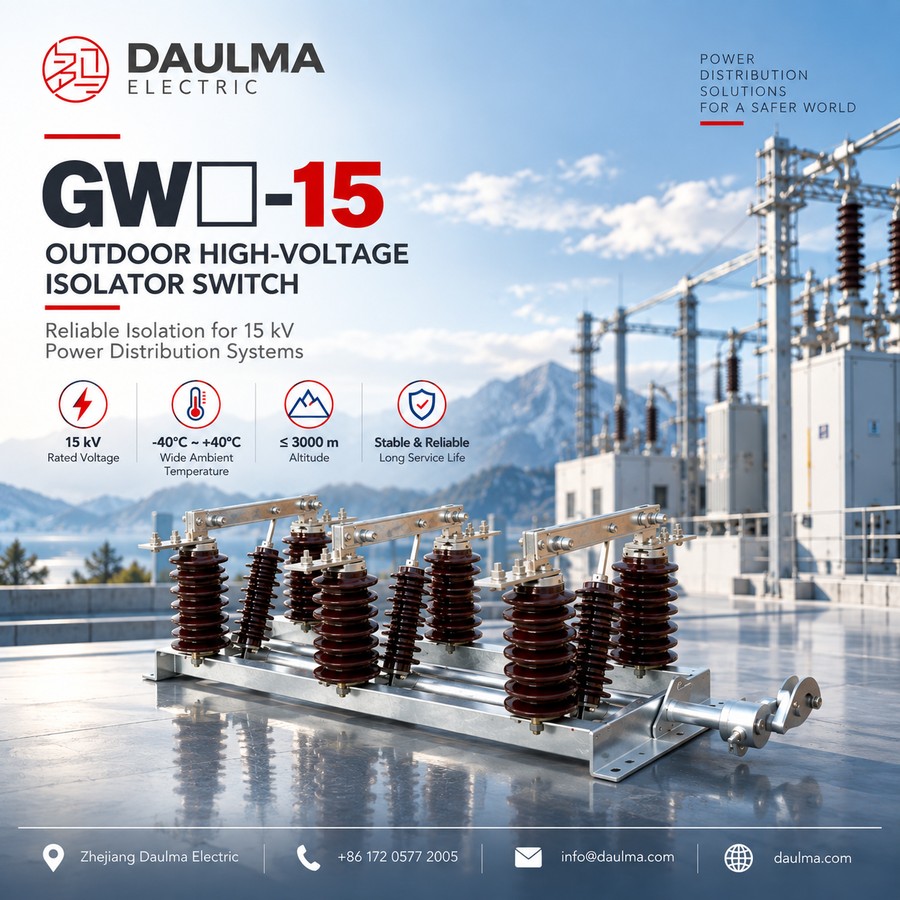
Model Designation
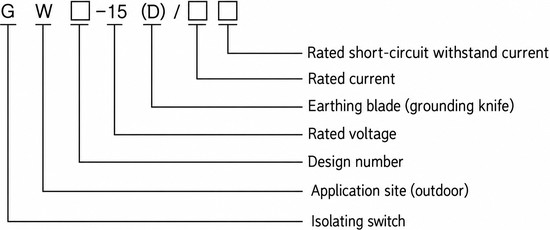
The type is designated G W□-15 (D)/□□ and decoded as follows:
- G — disconnector
- W — place of use: outdoor
- □ — design sequence number
- 15 — rated voltage in kV (40.5 kV version also available)
- (D) — earthing switch (D1 moving-contact side / D2 static-contact side); omitted on the standard no-earthing type covered here
- □ — rated current in A
- □ — rated short-time withstand current in kA
Construction and Operation
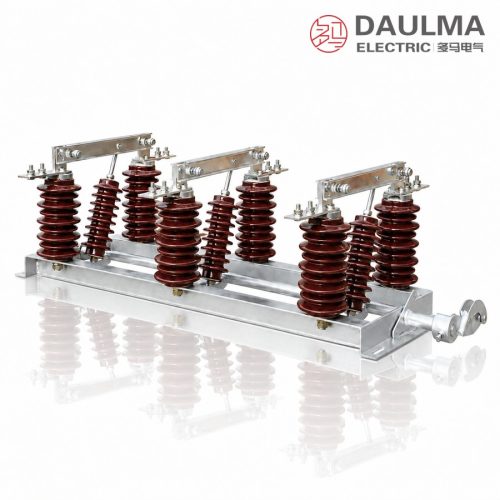
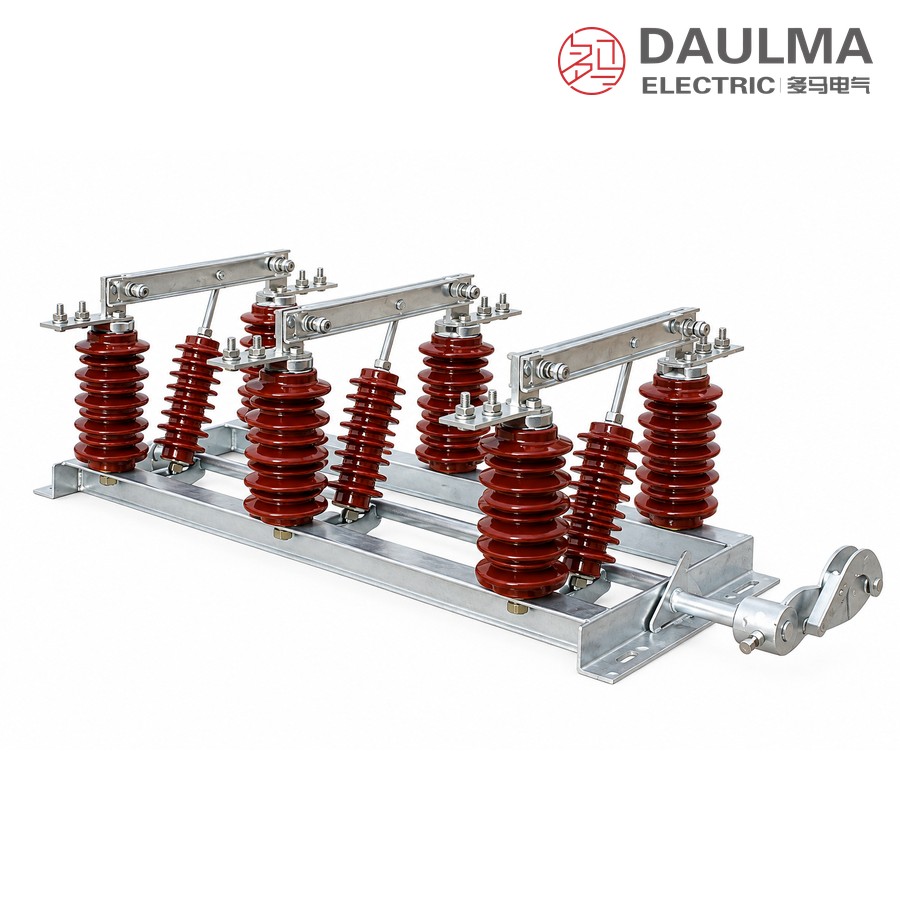
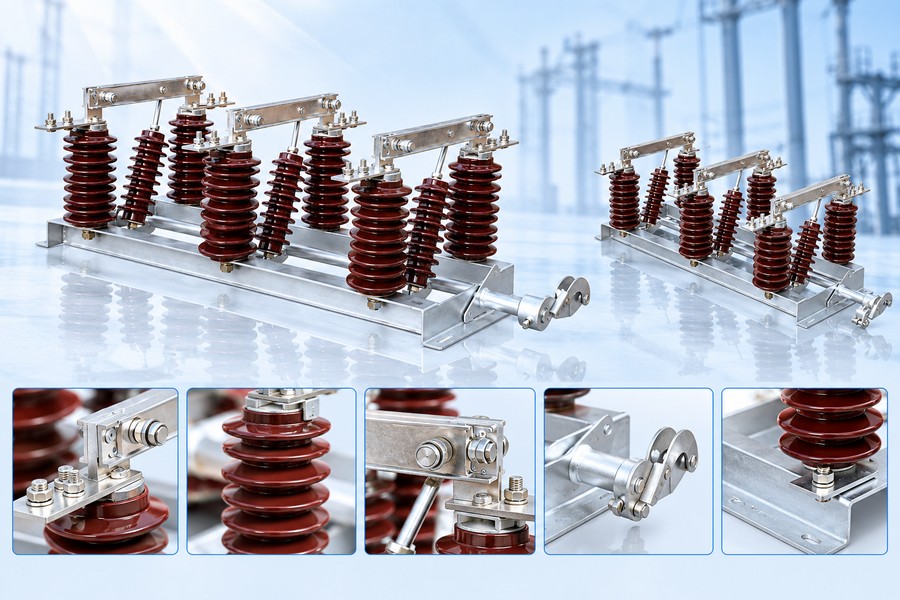
- Single-pole unit. Each pole is an independent assembly of the knife, moving and static contacts, operating rod and supporting porcelain insulators mounted on a galvanised steel base frame; three poles are set side by side at the phase spacing to make up the three-phase disconnector.
- Horizontal rotation contacts. The double-plane knife contacts rotate horizontally about the supporting insulators, giving a wide, clearly visible break and low contact resistance across the rated-current range.
- Manual or motorised operation. The standard type is driven by a CS6 manual operating mechanism through a three-phase linkage shaft and bent arms; a motorised mechanism can be fitted for remote operation with open / close position indication.
- Pollution-proof design. The pollution-proof version uses insulators with extended creepage distance for service in heavily polluted coastal and industrial regions.
Technical Parameters
Rated Parameters
| No. | Item | Unit | Parameter | Remark |
|---|---|---|---|---|
| 1 | Rated voltage | kV | 15, 40.5 | — |
| 2 | Rated current | A | 630, 1250 | — |
| 3 | Rated peak withstand current | kA | 50, 100 | — |
| 4 | Rated short-time withstand current (4 s) | kA | 20, 40 | — |
Type and Specification (standard, without earthing switch)
| No. | Structural type | 630 A | 1250 A |
|---|---|---|---|
| 1 | Without earthing switch | GW□-15, 40.5/630 | GW□-15, 40.5/1250 |
D1 (moving-contact side) and D2 (static-contact side) earthing-switch versions of the same series are supplied on request.
Normal Service Conditions
- Altitude: not above 3000 m
- Ambient temperature: upper limit +40℃, lower limit −10℃ for general areas (−40℃ for cold areas)
- Wind pressure: not exceeding force 8
- Seismic intensity: not above intensity 8
- Vibration: no frequent violent vibration at the installation site
- Standard type: installation site free from gases, vapours, chemical deposits, salt mist, dust or other explosive or corrosive substances that seriously affect the insulation and conductivity of the disconnector
- Pollution-proof type: suitable for heavily polluted areas, free from substances that may cause fire or explosion
Installation & Wiring
Installation and Mounting
Assemble the single poles on the common frame at the specified phase spacing, fix the frame to the gantry or foundation through the four slotted holes, and couple the poles to the CS6 mechanism with the three-phase linkage shaft and bent arms. Check free travel, correct seating and the full visible break, then bond the frame to the earth grid.
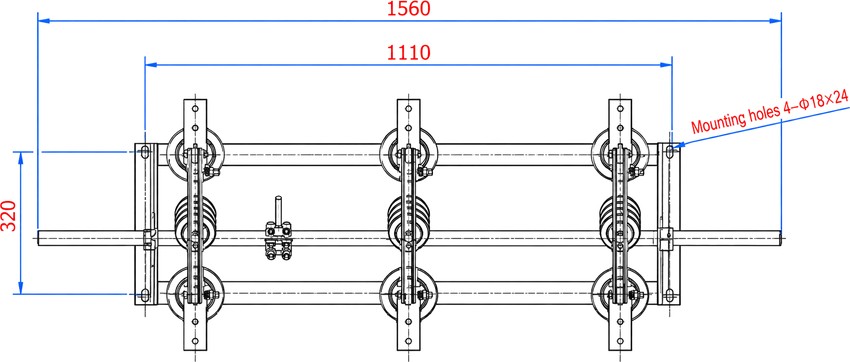
Outline & Mounting Dimensions
| Item | Value | Remark |
|---|---|---|
| Overall length | 1500 mm | three-pole assembly |
| Mounting-hole centre span | 1110 mm | along the frame |
| Pole / frame height | 320 mm | supporting insulator centre height |
| Mounting holes | 4 × Φ18 × 24 mm | slotted |
| Phase spacing | per voltage class | set on the frame at order |
Selection & FAQs
Selection Guide
- Choose the rated voltage (15 kV or 40.5 kV) to match the network and the rated current (630 A or 1250 A) to match the feeder duty.
- This page is the standard disconnector without an earthing switch; select the D1 or D2 earthing-switch version separately where the line side must be earthed.
- For heavily polluted sites order the pollution-proof version with extended-creepage insulators.
- Decide between the CS6 manual mechanism and the motorised mechanism with open / close position indication.
- Confirm the mechanism position (side or centre operating bent arm) against the gantry layout.
Frequently Asked Questions
Q1: What does the type designation GW□-15 (D)/□□ mean?
G is the disconnector, W the outdoor place of use and □ the design sequence number; 15 is the rated voltage in kV, D indicates an earthing switch (D1 moving-contact side, D2 static-contact side), and the final two fields give the rated current in A and the rated short-time withstand current in kA.
Q2: Can this disconnector interrupt load or short-circuit current?
No. It is designed only to open and close circuits under voltage without load and to provide a visible insulating gap for isolation; load and short-circuit currents must be interrupted by the associated circuit breaker, with which the disconnector is interlocked.
Q3: What is the difference between this page and the earthing-switch versions?
This page is the standard GW□-15 without an earthing switch. The D1 and D2 versions add an earthing knife on the moving-contact or static-contact side with a mechanical interlock against the main contacts; they are supplied as separate configurations of the same series.
Q4: What does the pollution-proof version improve?
It uses insulators with extended creepage distance so the disconnector meets the requirements of heavily polluted areas and effectively avoids the pollution flashover that may occur during operation; it should still be free from explosive or fire-causing substances.
Q5: What are the service conditions?
Altitude not above 3000 m, ambient temperature +40℃ with a lower limit of −10℃ (−40℃ in cold areas), wind pressure up to force 8, seismic intensity up to 8, and no frequent violent vibration at the installation site.
Q6: What data should I provide when ordering?
The rated voltage and current, whether an earthing switch is required (plain, D1 or D2), the manual CS6 or motorised mechanism, the standard or pollution-proof insulators and the mechanism position. See the disconnector range for related models.