


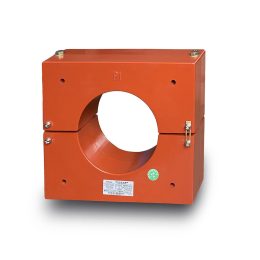
LKZB-0.5 Split-Core Zero-Sequence CT: 6-35kV Application Guide
Executive Summary
This technical document provides comprehensive engineering guidance for lkzb-0.5 split-core zero-sequence ct: 6-35kv application guide. The analysis covers operational mechanisms, design characteristics, implementation requirements, and compliance with international standards including IEC 61869 and IEEE C57 series.
Document Scope: This guide addresses technical professionals involved in specification, installation, commissioning, and maintenance of medium voltage instrument transformers and protection equipment in 6-35kV power distribution systems.
Key Topics Covered:
- Operating principles and mechanism analysis
- Design features and performance characteristics
- Engineering implementation checklist
- Standards compliance and testing requirements
Mechanism Analysis
Operating Principle
The equipment operates based on fundamental electromagnetic induction principles as defined in IEC 61869. Primary current or voltage is transformed to standardized secondary values suitable for metering, protection, and control applications.
Core Components
- Primary Circuit: High voltage/current input terminals with appropriate insulation coordination
- Magnetic Core: High-permeability silicon steel or nanocrystalline alloy for optimal accuracy
- Secondary Windings: Multiple accuracy classes available for simultaneous metering and protection
- Insulation System: Epoxy resin cast, oil-immersed, or SF6 gas insulation per application requirements
- Housing: Weather-resistant enclosure with IP65 or higher protection rating
Performance Characteristics
| Parameter | Specification | Standard Reference |
|---|---|---|
| Accuracy Class | 0.2S, 0.5S, 5P10, 5P20 (application dependent) | IEC 61869-2 |
| Rated Frequency | 50/60 Hz | IEC 60050 |
| Insulation Level | Per system voltage class (see Standards section) | IEC 61869-1 |
| Thermal Current (Ith) | Typically 31.5 kA for 1-3 seconds | IEC 61869-2 |
| Dynamic Current (Idyn) | Typically 2.5 × Ith | IEC 61869-2 |
Error Mechanisms
Understanding potential error sources is critical for proper application:
- Ratio Error: Deviation from nominal transformation ratio due to core magnetization characteristics
- Phase Displacement: Angular difference between primary and secondary phasors
- Burden Impact: Secondary load exceeding rated burden causes accuracy degradation
- Saturation: Core saturation during fault conditions affects protection performance
- Temperature Effects: Thermal variation influences magnetic properties and accuracy
Design Features
Insulation Technology
The equipment employs advanced insulation systems designed for long-term reliability in medium voltage applications:
- Epoxy Resin Casting: Vacuum pressure impregnation (VPI) ensures void-free insulation with excellent partial discharge performance (<10 pC at 1.2 Ur)
- Creepage Distance: Optimized for pollution degree III per IEC 60815
- Partial Discharge Inception: >1.2 × rated voltage for class A insulation systems
Magnetic Core Design
- Core Material: Grain-oriented silicon steel (CRGO) or nanocrystalline alloy for superior permeability
- Core Configuration: Toroidal or rectangular geometry optimized for flux distribution
- Flux Density: Operating point selected to balance accuracy and saturation margin
Secondary Terminal Configuration
- Terminal Types: Screw-type or spring-loaded terminals for 2.5-6 mm² conductors
- Polarity Marking: Clear P1/P2 (primary) and S1/S2 (secondary) identification per IEC 61869
- Multi-Ratio Taps: Available on selected models for flexible application
- Terminal Box: IP65 rated with adequate space for field wiring
Mechanical Construction
- Housing Material: Stainless steel (304/316), aluminum alloy, or UV-stable polymer
- Mounting: Flexible options including busbar mount, cable hang, or bracket installation
- Window Aperture: Sized to accommodate standard conductor and busbar dimensions
- Weight Optimization: Minimized mass reduces structural support requirements
Environmental Protection
- Ingress Protection: IP65 minimum for outdoor applications
- Corrosion Resistance: C5-M marine environment rating per ISO 12944
- UV Stability: Polymer components rated for 20+ years outdoor exposure
- Temperature Range: -25°C to +55°C ambient operation
Engineering Checklist
Pre-Installation Verification
- [ ] System Voltage: Verify equipment rating matches system nominal voltage (6/10/15/20/35 kV)
- [ ] Primary Current: Select ratio with 20-30% margin above maximum load current
- [ ] Accuracy Class: Confirm metering (0.2S/0.5S) and protection (5P10/5P20) requirements
- [ ] Burden Calculation: Sum all connected devices plus cable losses; verify ≤ rated burden
- [ ] Short-Circuit Rating: Ensure Ith and Idyn exceed system fault levels
- [ ] Physical Dimensions: Verify clearance requirements and mounting compatibility
- [ ] Environmental Conditions: Confirm altitude, temperature, and pollution degree compatibility
Installation Requirements
- [ ] Mounting Orientation: Install per manufacturer specifications (vertical/horizontal as designed)
- [ ] Conductor Alignment: Center primary conductor in aperture; avoid eccentric positioning
- [ ] Clearance Distances: Maintain minimum phase-to-phase and phase-to-ground clearances per IEC 61869
- [ ] Grounding: Connect equipment ground terminal to substation ground grid
- [ ] Secondary Wiring: Use minimum 2.5 mm² copper; keep secondary cable length <50m where possible
- [ ] Polarity: Verify P1/P2 and S1/S2 orientation matches protection scheme requirements
- [ ] Terminal Tightness: Torque all connections to manufacturer specifications
Commissioning Tests
- [ ] Visual Inspection: Check for physical damage, proper labeling, and secure mounting
- [ ] Insulation Resistance: Megger test primary-to-ground and secondary-to-ground (>1000 MΩ at 2500V DC)
- [ ] Ratio Test: Verify transformation ratio at multiple tap points (if applicable)
- [ ] Polarity Test: Confirm additive/subtractive polarity per connection diagram
- [ ] Excitation Test: Measure magnetizing current at rated voltage (compare to factory data)
- [ ] Burden Verification: Measure actual secondary circuit impedance
- [ ] Winding Resistance: DC resistance measurement for baseline documentation
Periodic Maintenance
- [ ] Annual Visual: Inspect for contamination, damage, or abnormal heating
- [ ] 3-Year Testing: Insulation resistance, ratio verification, polarity check
- [ ] 5-Year Comprehensive: Full testing per IEC 61869 including accuracy verification
- [ ] Post-Fault Inspection: Examine after any through-fault exceeding rated Ith
- [ ] Terminal Inspection: Check tightness and corrosion annually
Safety Precautions
- [ ] Short-circuit secondary terminals before disconnecting any secondary wiring
- [ ] Use properly rated shorting blocks or test switches
- [ ] Verify secondary circuit continuity before removing shorting devices
- [ ] Follow lockout/tagout procedures for all maintenance activities
- [ ] Wear appropriate PPE for working on energized equipment
Standards Reference
International Standards
| Standard | Title | Application |
|---|---|---|
| IEC 61869-1 | Instrument Transformers – Part 1: General Requirements | General requirements for all instrument transformers |
| IEC 61869-2 | Instrument Transformers – Part 2: Additional Requirements for Current Transformers | Specific requirements for current transformers |
| IEC 61869-3 | Instrument Transformers – Part 3: Additional Requirements for Inductive Voltage Transformers | Specific requirements for voltage transformers |
| IEC 61869-5 | Instrument Transformers – Part 5: Additional Requirements for Capacitive Voltage Transformers | CVT-specific requirements |
| IEC 60044-1 | Instrument Transformers – Part 1: Current Transformers | Superseded by IEC 61869-2 (legacy reference) |
| IEC 60044-2 | Instrument Transformers – Part 2: Inductive Voltage Transformers | Superseded by IEC 61869-3 (legacy reference) |
| IEC 60815 | Guide for the Selection of Insulators in Respect of Polluted Conditions | Insulation coordination for polluted environments |
| IEC 60529 | Degrees of Protection Provided by Enclosures (IP Code) | Ingress protection classification |
IEEE Standards
| Standard | Title | Application |
|---|---|---|
| IEEE C57.13 | IEEE Standard Requirements for Instrument Transformers | North American instrument transformer requirements |
| IEEE C57.13.1 | IEEE Standard for Performance Requirements for Instrument Transformers | Performance criteria and testing |
| IEEE C57.13.3 | IEEE Guide for Grounding of Instrument Transformer Secondary Circuits | Secondary circuit grounding practices |
| IEEE C57.13.6 | IEEE Standard Requirements for Instrument Transformers Used in Revenue Metering | Revenue metering accuracy requirements |
Chinese National Standards (GB)
| Standard | Title | Application |
|---|---|---|
| GB 20840.1 | Instrument Transformers – Part 1: General Requirements | Equivalent to IEC 61869-1 |
| GB 20840.2 | Instrument Transformers – Part 2: Current Transformers | Equivalent to IEC 61869-2 |
| GB 1208 | Current Transformers | Legacy Chinese CT standard |
| GB 1207 | Voltage Transformers | Legacy Chinese VT standard |
| DL/T 866 | Selection and Calculation Guide for Current Transformers | Power industry application guide |
Testing Standards
| Standard | Title | Application |
|---|---|---|
| IEC 60270 | High-voltage Test Techniques – Partial Discharge Measurements | Partial discharge testing methodology |
| IEC 60060-1 | High-voltage Test Techniques – Part 1: General Definitions and Test Requirements | Dielectric testing requirements |
| ISO 17025 | General Requirements for the Competence of Testing and Calibration Laboratories | Accredited testing laboratory requirements |
Compliance Documentation
Manufacturers should provide the following documentation with each unit:
- Type Test Certificate: Demonstrates compliance with applicable standards
- Routine Test Report: Documents results of mandatory production tests
- Accuracy Certificate: Verifies ratio and phase angle accuracy at rated burden
- Dimensional Drawing: Shows physical dimensions and mounting details
- Connection Diagram: Illustrates terminal identification and wiring
- Installation Manual: Provides step-by-step installation instructions
- Maintenance Guide: Outlines periodic maintenance requirements
Document Version: 1.0 | Generated: 2026-03-02 | Classification: Technical Reference
Standards Compliance: IEC 61869 Series, IEEE C57.13 Series, GB 20840 Series
- LB-10W Current Transformer: Field Installation Best Practices
- CT Saturation Impact on Protection Relay Accuracy During Fault Currents
- High Altitude Impact on Epoxy Resin CT Abnormal Heating and Partial Discharge
- Combined Transformer Interface Matching with Switchgear: Critical Dimension Control for Compact Installation
- Instrument Transformer Fault Handling: A Technical Guide
- Analysis of the Impact of Current Transformer Faults on Energy Meter Accuracy