


LZZBJ9-35 High Voltage Insulation Design for 35kV Current Transformers
LZZBJ9-35 High Voltage Insulation Design for 35kV Current Transformers
Executive Summary
The LZZBJ9-35 represents a critical class of 35kV epoxy resin cast current transformers designed for indoor metering and protection applications in medium voltage switchgear systems. Unlike their 10kV counterparts, 35kV current transformers operate in a fundamentally different dielectric stress environment where insulation design becomes the primary determinant of reliability, safety, and operational lifespan.
This technical document focuses on two critical aspects of 35kV CT insulation design: dielectric stress distribution management and partial discharge control. At 35kV system voltage (with maximum operating voltage of 40.5kV), the electric field stresses increase non-linearly compared to 10kV designs, requiring sophisticated field grading techniques, optimized epoxy resin formulations, and precise geometric control of creepage and clearance distances.
The insulation system must withstand not only continuous operating voltage but also transient overvoltages including lightning impulse (170kV BIL for 35kV class) and switching impulses. Partial discharge inception voltage must exceed 1.5 times the maximum system voltage to ensure decades of maintenance-free operation. This document provides engineering analysis and practical design guidelines for achieving these performance targets in epoxy resin cast current transformers.
Insulation Mechanism Analysis
Dielectric Stress Distribution in 35kV vs 10kV Current Transformers
The transition from 10kV to 35kV class current transformers represents more than a simple voltage scaling—it introduces fundamentally different insulation challenges that require comprehensive redesign of the entire dielectric system.
Electric Field Intensity Scaling: In a coaxial cylindrical geometry typical of CT primary-insulation-secondary construction, the radial electric field stress follows the relationship:
E(r) = V / (r × ln(R/r))
Where V is the applied voltage, r is the radial position, and R is the outer radius. For 35kV systems (Um = 40.5kV), the maximum field stress at the conductor surface can exceed 8-12 kV/mm depending on geometry, compared to 2-4 kV/mm for 10kV designs. This 3-4x increase in field stress demands exponential improvements in material quality and geometric precision.
Field Concentration Points: The most critical stress concentration occurs at:
- Primary conductor entry/exit points where the conductor penetrates the insulation wall
- Sharp edges of the secondary winding bobbin
- Interfaces between epoxy resin and embedded metallic components
- Triple points where conductor, insulation, and air meet
At 35kV, these localized stress concentrations can exceed 20 kV/mm without proper field grading, approaching the breakdown strength of even high-quality epoxy systems.
Epoxy Resin Formulation for 35kV Class
Standard epoxy formulations suitable for 10kV applications prove inadequate for 35kV service. The resin system must be engineered for:
Dielectric Strength: Minimum 20 kV/mm at 23°C, with less than 15% reduction at 90°C operating temperature. This requires:
- Bisphenol-A or Bisphenol-F epoxy base with epoxide equivalent weight (EEW) of 180-220 g/eq
- Cycloaliphatic amine or anhydride curing agents for superior thermal and electrical properties
- High-purity fused silica fillers (99.9%+ SiO₂) with particle size distribution optimized for packing density
- Filler loading of 65-75% by weight to reduce CTE mismatch and improve thermal conductivity
Partial Discharge Resistance: The formulation must incorporate:
- Nano-silica additives (20-50nm particle size) at 1-3% loading to suppress PD inception
- Surface treatment of fillers with silane coupling agents to eliminate micro-voids at filler-matrix interfaces
- Viscosity modifiers to ensure complete impregnation of complex geometries without air entrapment
Thermal-Mechanical Properties:
| Property | 10kV Class | 35kV Class Requirement |
|---|---|---|
| Glass Transition Temperature (Tg) | ≥120°C | ≥140°C |
| Coefficient of Thermal Expansion | 25-35 × 10⁻⁶/K | 15-25 × 10⁻⁶/K |
| Thermal Conductivity | 0.5-0.8 W/m·K | 0.8-1.2 W/m·K |
| Flexural Strength | ≥80 MPa | ≥100 MPa |
| Fracture Toughness (KIC) | ≥0.6 MPa·m¹/² | ≥0.8 MPa·m¹/² |
The reduced CTE is critical for 35kV designs because thermal cycling during load variations creates interfacial stresses that can initiate micro-cracking. These micro-cracks become sites for partial discharge inception and eventual insulation failure.
Creepage and Clearance Requirements (IEC 60071)
IEC 60071-1 defines insulation coordination requirements based on system voltage, altitude, and pollution severity. For 35kV systems (Um = 40.5kV):
Clearance (Air Distance):
- Power frequency withstand: Minimum 180mm for pollution degree III
- Lightning impulse withstand: Determined by 170kV BIL requirement, typically 250-300mm in air
- Within solid insulation (epoxy): Effective clearance reduced by dielectric constant (εᵣ ≈ 4-5), allowing 60-80mm solid insulation thickness
Creepage Distance:
- Pollution degree II (indoor): 20mm/kV × 40.5kV = 810mm minimum
- Pollution degree III (industrial): 25mm/kV × 40.5kV = 1012mm minimum
- Creepage factor achieved through sheds/ribs on external insulation surface
Altitude Correction: For installations above 1000m:
- Clearance must be multiplied by altitude correction factor: Ka = e(H-1000)/8150
- At 2000m altitude: Ka = 1.13 (13% increase required)
- At 3000m altitude: Ka = 1.27 (27% increase required)
For the LZZBJ9-35 designed for indoor switchgear applications, standard altitude correction applies only if specified for high-altitude installations. Default design assumes ≤1000m altitude.
Design Features for 35kV Application
Field Grading Techniques and Stress Relief Design
Effective field grading is the single most important design feature distinguishing 35kV CTs from lower voltage classes. Without proper field control, localized stress concentrations would exceed material limits even with adequate bulk insulation thickness.
Geometric Field Grading:
- Toroidal Primary Conductor: The primary conductor should maintain smooth toroidal geometry with minimum bend radius of 3× conductor diameter. Sharp bends create field enhancement factors of 2-3x.
- Graded Insulation Thickness: Insulation wall thickness varies radially to maintain uniform volumetric stress. Inner layers (high stress) use 2-3mm thickness with premium resin; outer layers use standard formulation.
- Stress Relief Cones: At primary conductor entry/exit points, conical stress relief geometries with 30-45° angle distribute field lines over larger surface area, reducing peak stress by 40-60%.
- Secondary Winding Shield: A grounded electrostatic shield between primary insulation and secondary winding eliminates capacitive coupling and provides defined potential gradient.
Material-Based Field Grading:
- Functionally Graded Materials (FGM): Incorporation of non-linear resistive fillers (ZnO varistor particles, SiC) in epoxy matrix creates field-dependent conductivity. At high field stress (>3 kV/mm), conductivity increases, redistributing stress to lower-field regions.
- High-Permittivity Layers: Strategic placement of epoxy layers with εᵣ = 8-12 (vs. standard εᵣ = 4-5) at stress concentration points reduces field intensity by factor of εhigh/εlow.
- Semiconductive Stress Grading Tapes: Applied at conductor-insulation interface, these tapes with volume resistivity of 10²-10⁴ Ω·cm smooth potential distribution.
Partial Discharge Control at 35kV Voltage Levels
Partial discharge (PD) is the primary degradation mechanism in medium voltage insulation systems. At 35kV, PD control becomes critical because:
- PD inception voltage (PDIV) must exceed 1.5 × Um = 60.75kV (rms) per IEC 61869
- PD extinction voltage (PDEV) must exceed 1.1 × Um = 44.55kV (rms)
- Acceptable PD magnitude: <10 pC at 1.1 × Um, <50 pC at 1.5 × Um
PD Sources in Epoxy Cast CTs:
- Internal Voids: Micro-voids (>50μm) within epoxy matrix or at filler interfaces. Gas within voids has lower dielectric strength than epoxy, leading to localized breakdown.
- Delamination: Poor adhesion between epoxy and embedded components creates interfacial gaps where PD initiates.
- Surface Discharge: Contamination or moisture on external insulation surface reduces flashover voltage.
- Corona at Conductor Ends: Unshielded conductor terminations in air create ionization.
PD Suppression Strategies:
- Vacuum Pressure Impregnation (VPI): Casting under vacuum (<1 mbar) followed by pressure (6-10 bar) eliminates entrapped air and ensures complete resin penetration.
- Resin Degassing: Pre-cure degassing of epoxy mixture at 60-80°C under vacuum removes dissolved gases that would form micro-bubbles during cure.
- Controlled Curing Cycle: Multi-stage cure (2h @ 80°C + 4h @ 120°C + 2h @ 140°C) with ramp rates <20°C/hour prevents thermal shock and minimizes internal stresses.
- Conductor Surface Preparation: Primary conductors polished to Ra < 3.2μm surface finish eliminates micro-protrusions that enhance local field.
- Edge Rounding: All metallic edges rounded to minimum 2mm radius eliminates field concentration points.
Type Test Requirements for 35kV Class
IEC 61869-2 defines comprehensive type testing for current transformers. Key tests for 35kV class LZZBJ9-35:
Lightning Impulse Withstand (BIL):
- Test voltage: 170kV peak (standard), 200kV peak (severe duty)
- Waveform: 1.2/50μs (front time/time to half-value)
- Application: 15 positive + 15 negative impulses
- Acceptance: No flashover, no puncture, no voltage collapse
Power Frequency Withstand:
- Test voltage: 95kV (rms) for 60 seconds (standard), 80kV (rms) for alternative
- Frequency: 48-62 Hz
- Acceptance: No flashover, no puncture
Partial Discharge Measurement:
- Pre-conditioning: 1.2 × Um for 60 seconds
- Measurement at: 1.1 × Um (44.55kV) and 1.5 × Um (60.75kV)
- Acceptance: <10 pC at 1.1 × Um, <50 pC at 1.5 × Um
- Test method: IEC 60270 calibrated measurement circuit
Temperature Rise Test:
- Primary current: Rated continuous thermal current (Icth)
- Duration: Until thermal stability (ΔT < 1K/hour)
- Acceptance: Temperature rise ≤ specified limit (typically 65K for epoxy cast)
Short-Time Thermal Current:
- Test current: Ith (typically 25-40kA for 35kV CTs)
- Duration: 1 second or 3 seconds as specified
- Acceptance: No damage, ratio error within limits post-test
Dynamic Current:
- Test current: 2.5 × Ith (peak)
- Application: First major loop of asymmetrical fault current
- Acceptance: No mechanical damage, no flashover
Engineering Checklist
The following checklist ensures comprehensive coverage of critical design and manufacturing parameters for LZZBJ9-35 35kV current transformers:
Design Phase
- Calculate maximum electric field stress at all critical points (conductor surface, edges, interfaces)
- Verify clearance distances per IEC 60071 for specified altitude and pollution degree
- Verify creepage distances with appropriate safety margin (≥20% above minimum)
- Design stress relief cones with optimal angle (30-45°) and length
- Specify epoxy resin formulation with documented dielectric and thermal properties
- Design secondary electrostatic shield with proper grounding connection
- Perform FEM electric field simulation to validate stress distribution
- Calculate thermal performance under rated and overload conditions
- Design terminal box with adequate clearance for field wiring
- Specify PDIV target ≥1.5 × Um with measurement verification method
Material Selection
- Epoxy resin system with Tg ≥140°C and dielectric strength ≥20 kV/mm
- Fused silica filler with 99.9%+ purity and optimized particle size distribution
- Primary conductor: T2 copper or equivalent, surface finish Ra ≤3.2μm
- Secondary winding: Enamel-coated copper wire with appropriate insulation class
- Core material: Grain-oriented silicon steel or nanocrystalline for metering accuracy
- Terminal materials: Copper alloy with tin or silver plating
- Insulating barriers: Nomex or equivalent aramid paper for additional dielectric margin
Manufacturing Process Control
- Vacuum drying of all components before assembly (≤100 ppm moisture)
- Clean room assembly environment (Class 10000 or better)
- Resin mixing under vacuum with controlled temperature (±2°C)
- Casting under vacuum <1 mbar followed by pressure cure at 6-10 bar
- Controlled cure cycle with documented temperature profile
- Post-cure annealing to relieve residual stresses
- 100% partial discharge test on production units
- Dimensional inspection of critical clearances
- Visual inspection for surface defects, voids, inclusions
Quality Assurance Testing
- Power frequency withstand test (routine test on every unit)
- Partial discharge measurement (routine test, <10 pC at 1.1 × Um)
- Ratio and phase angle error verification at rated burden
- Polarity check
- Inter-turn insulation test on secondary winding
- Seal tightness test (if applicable)
- Type tests per IEC 61869-2 on representative samples
Documentation
- Complete design dossier with calculations and simulations
- Material certificates for all critical components
- Manufacturing process specifications
- Quality control test records
- Type test reports from accredited laboratory
- Installation and maintenance instructions
Standards Reference
The LZZBJ9-35 35kV current transformer design and testing shall comply with the following international and national standards:
Primary Standards
- IEC 61869-2: Instrument transformers – Part 2: Additional requirements for current transformers
- IEC 60044-1: Instrument transformers – Part 1: Current transformers (superseded by IEC 61869-2 but still referenced)
- IEC 60071-1: Insulation coordination – Part 1: Definitions, principles and rules
- IEC 60071-2: Insulation coordination – Part 2: Application guide
- IEC 60270: High-voltage test techniques – Partial discharge measurements
- IEC 60060-1: High-voltage test techniques – Part 1: General definitions and test requirements
Material Standards
- IEC 60455: Resins for reactive flooring and electrical impregnating
- ASTM D149: Standard Test Method for Dielectric Breakdown Voltage and Dielectric Strength of Solid Electrical Insulating Materials
- ASTM D257: Standard Test Methods for DC Resistance or Conductance of Insulating Materials
- ISO 11357: Plastics – Differential scanning calorimetry (DSC) for Tg measurement
National Standards (China)
- GB 1208-2016: Current transformers for metering and protection (adopts IEC 61869-2)
- GB/T 22071: Instrument transformers – Test specification
- DL/T 725: Selection and application guide for power instrument transformers
- JB/T 10433: Epoxy resin cast current transformers for indoor use
Environmental and Safety Standards
- IEC 62271-200: High-voltage switchgear and controlgear – Part 200: AC metal-enclosed switchgear and controlgear for rated voltages above 1kV and up to and including 52kV
- IEC 60529: Degrees of protection provided by enclosures (IP Code)
- ISO 14001: Environmental management systems
- RoHS Directive 2011/65/EU: Restriction of hazardous substances in electrical equipment
Accuracy Classes
Per IEC 61869-2, the LZZBJ9-35 shall be available in the following accuracy classes:
| Application | Accuracy Class | Ratio Error at In (%) | Phase Displacement at In (minutes) |
|---|---|---|---|
| Metering | 0.2S | ±0.2 | ±10 |
| Metering | 0.5S | ±0.5 | ±20 |
| Protection | 5P10 | ±1.0 | ±60 |
| Protection | 5P20 | ±1.0 | ±60 |
| Protection | 10P10 | ±3.0 | ±120 |
Where the suffix number (10, 20) indicates the accuracy limit factor (ALF) – the multiple of rated current up to which the accuracy is maintained during fault conditions.
Service Conditions
Standard service conditions per IEC 61869-2:
- Ambient Temperature: -5°C to +40°C (standard), -25°C to +40°C (extended)
- Maximum Relative Humidity: 95% at 25°C
- Altitude: ≤1000m (standard), up to 3000m with correction factors
- Pollution Degree: II (indoor), III (industrial indoor)
- System Frequency: 50Hz or 60Hz
- System Voltage: Um = 40.5kV (35kV nominal)
For special applications outside these ranges, custom design considerations apply and must be specified at order stage.
Document prepared for technical reference. All design parameters shall be verified through type testing at accredited laboratories. Specifications subject to change based on application requirements and regulatory updates.

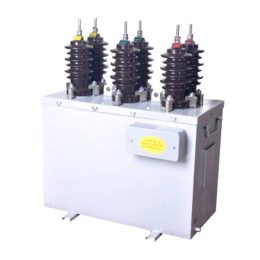
- JDZXF9, JDZX9-35W outdoor cast-resin voltage transformer (35kV VT/PT)
- Current Transformer Saturation Impact on Protection Relay Accuracy During Fault Currents
- TEST: Zero-Sequence vs Standard CT Installation Gap Analysis
- Number of Permissible Grounding Points in the Secondary Circuit of Voltage Transformers
- Zero-Sequence Current Transformer Protection Principle and Applications
- Analysis and Troubleshooting of Common Issues with Current Transformers