Overview
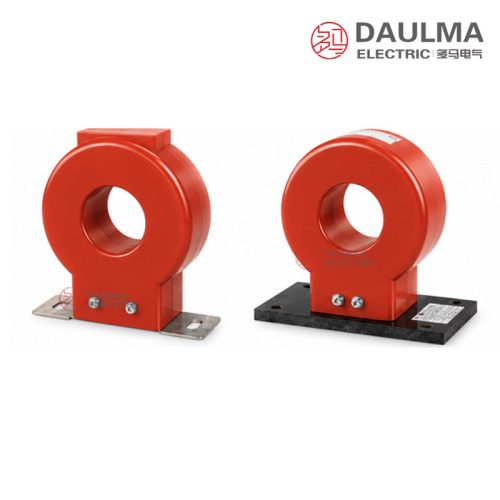
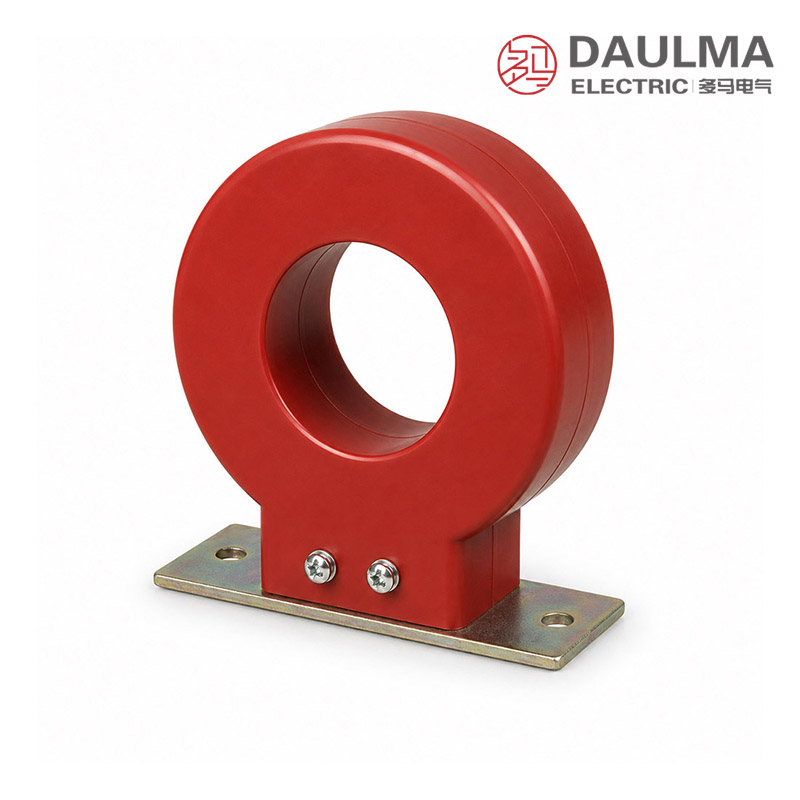
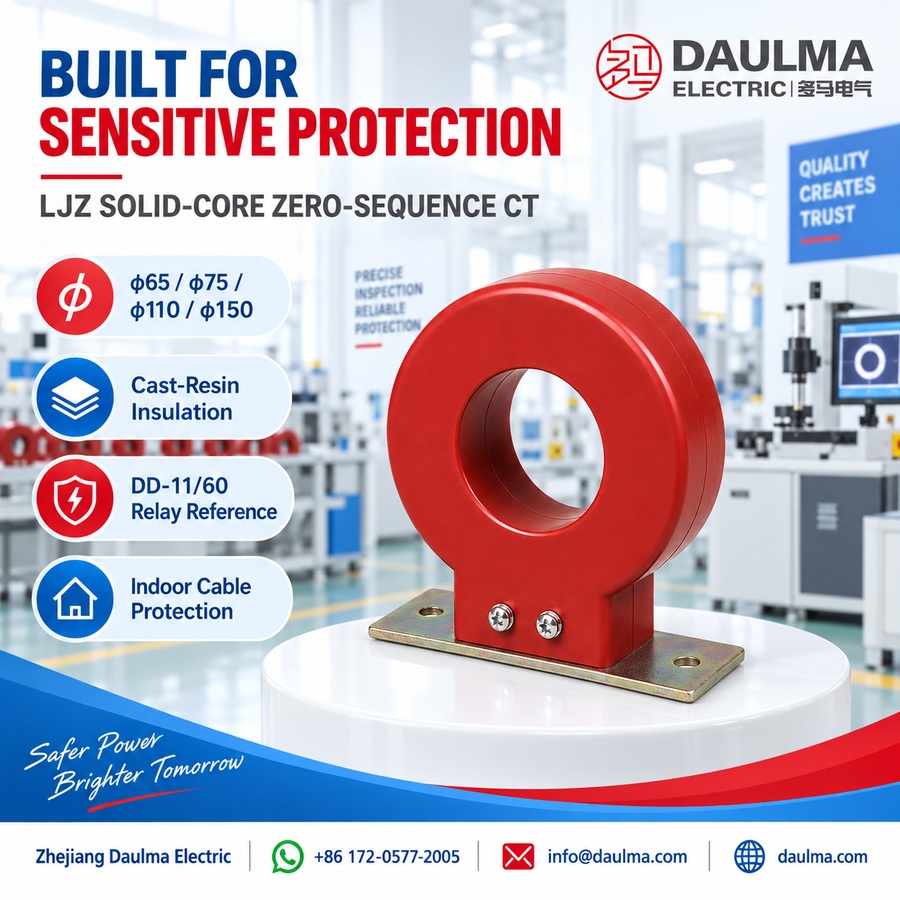
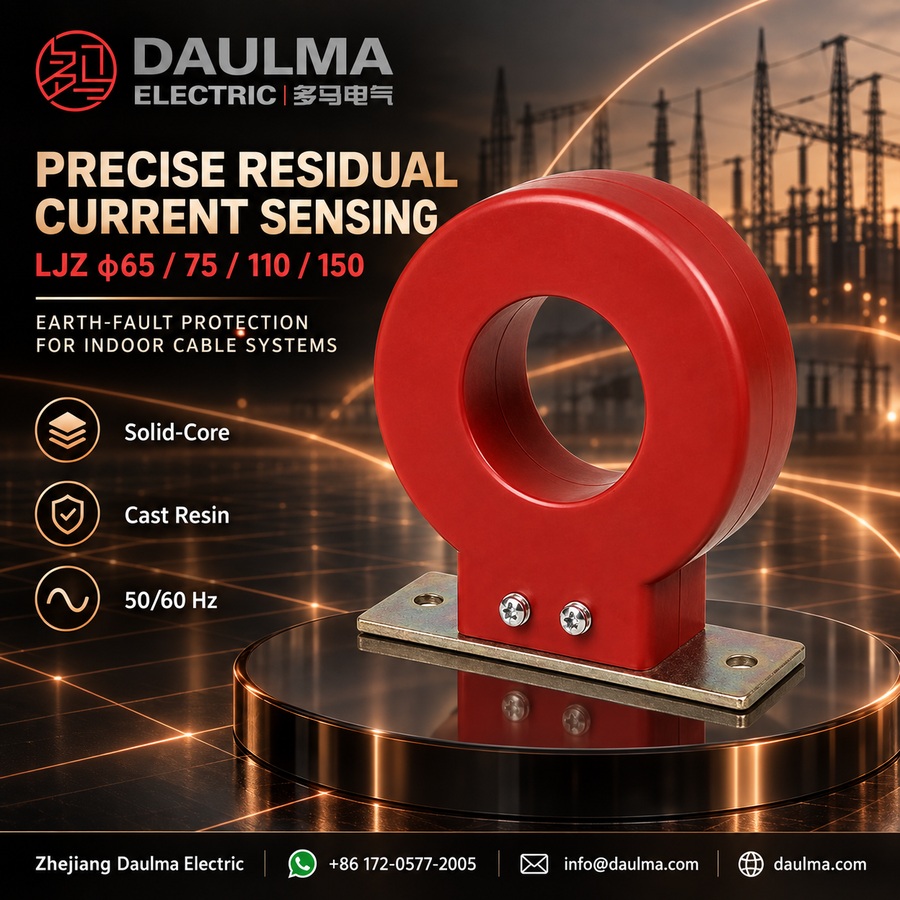
The LJZ-φ65 / φ75 / φ110 / φ150 series is a cast-resin insulated zero sequence current transformer designed for indoor use in systems up to 35kV. It features an annular iron core fully encapsulated in cast resin, providing reliable insulation and mechanical stability for grounding protection applications.
This transformer operates at rated frequencies of 50Hz or 60Hz and is intended for earth fault detection in small-current grounding systems. It complies with standard requirements for residual current monitoring and interfaces with relays such as the DD-11/60 for effective ground fault protection in medium-voltage switchgear and cable distribution systems.
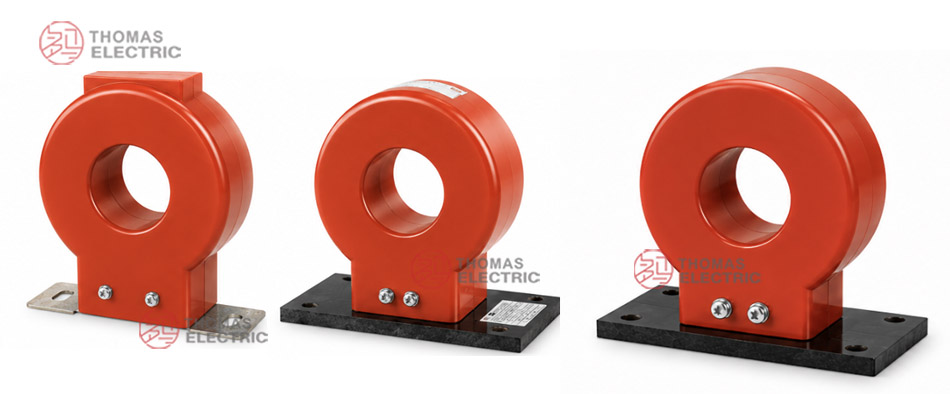
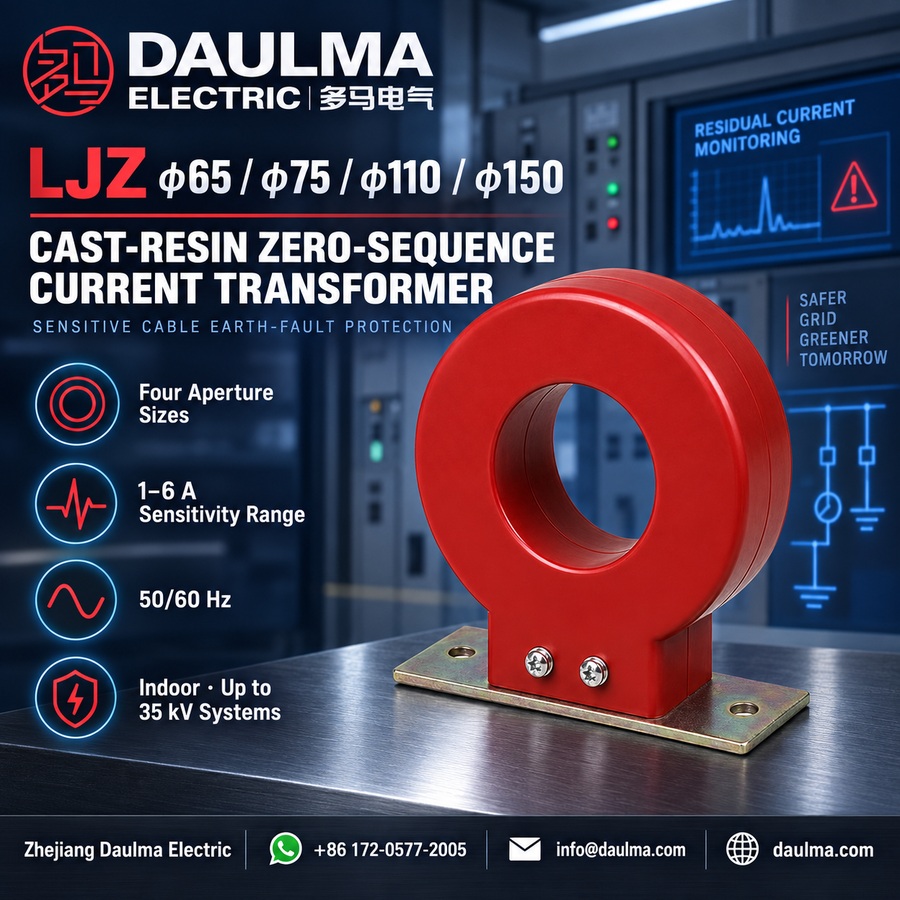
Key Ratings Snapshot
| Parameter | Rating |
|---|---|
| Rated voltage | Up to 35kV |
| Rated frequency | 50Hz / 60Hz |
| Insulation type | Cast-resin |
| Secondary test voltage | 3kV AC, power-frequency |
| Installation environment | Indoor |
| Application system | Small-current grounding |
| Core type | Annular iron core |
| Output signal | To earth fault relay (e.g., DD-11/60) |
| Primary conductor | Three-phase cable group |
| Operation principle | Zero sequence current detection |
| Compensation support | Optional capacitor connection |
| Mounting | Fixed base for panel or cabinet |
Model Designation
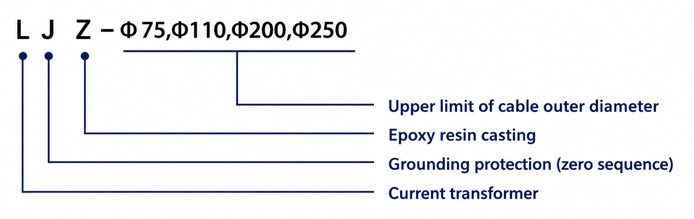
- L: Current transformer
- J: For earth protection / grounding protection
- Z: Cast-resin insulated structure
- φ65 / φ75 / φ110 / φ150: Nominal inner hole diameter / maximum cable opening size
Construction
The LJZ series features an annular iron core fully encapsulated in cast-resin insulation, ensuring high dielectric strength and mechanical robustness for indoor environments. The primary insulation is provided by the cable itself, while the secondary winding is insulated and tested to withstand a 3kV power-frequency voltage to ground. The compact design includes a fixed mounting base suitable for installation inside switchgear, protection panels, or cable rooms. The central window accommodates three-phase cable bundles, with aperture sizes selected based on the cable’s outer diameter.
Technical Parameters
Service Conditions
- Installation location: indoor
- Applicable system: small-current grounding system up to 35kV
- Rated frequency: 50Hz / 60Hz
- Cable routing requirement: The three-phase cable group should pass through the transformer window together.
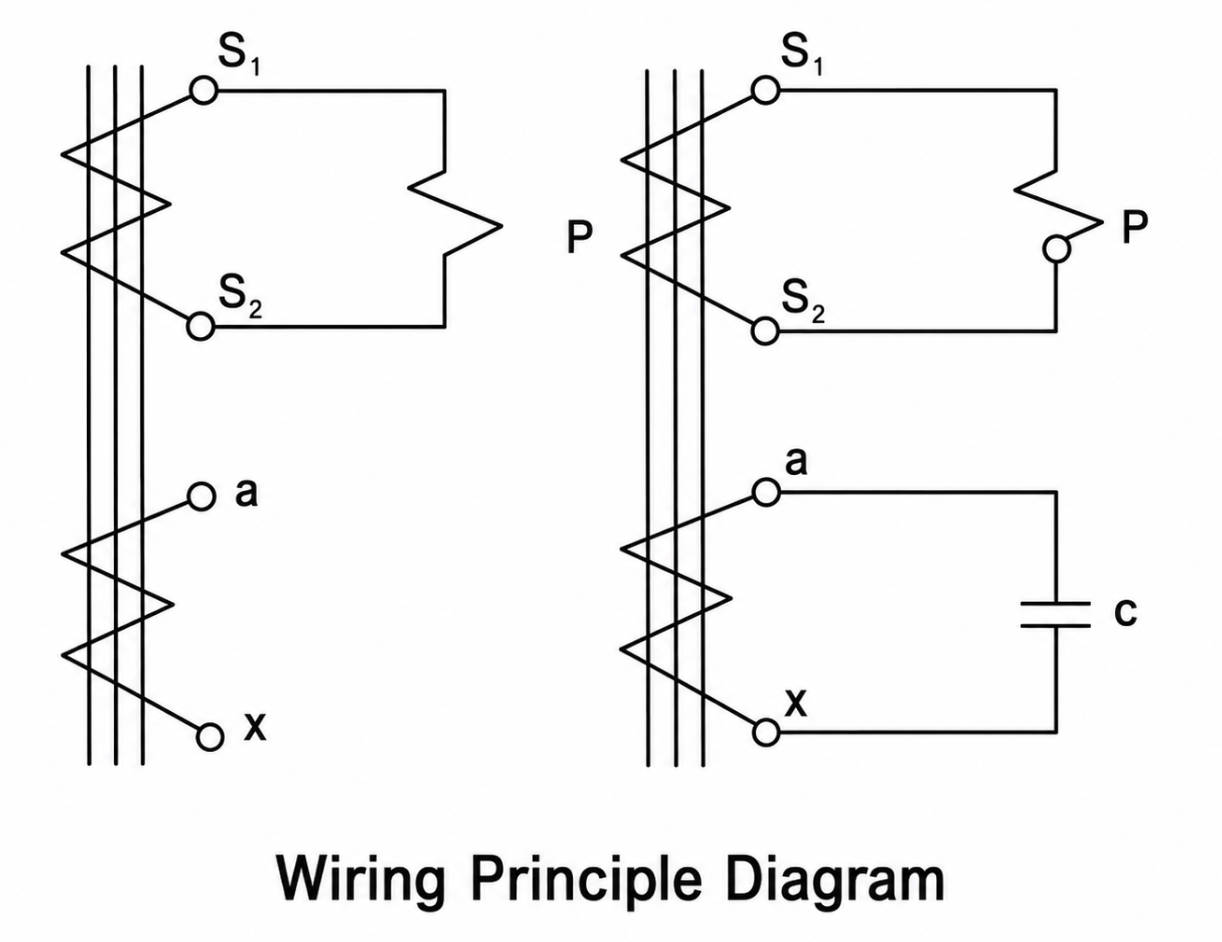
- Grounding and shielding connection: The cable shield, grounding conductor, and compensation capacitor should be connected according to the selected protection scheme.
- Installation environment: The installation environment should be free from severe vibration, corrosive gas, heavy moisture, conductive dust, and serious pollution.
- Special requirements note: For special cable diameter, relay setting, compensation capacitor connection, or protection sensitivity requirements, technical confirmation is recommended before ordering.
Technical Parameters
The LJZ series cast-resin zero sequence current transformers are designed for indoor use in small-current grounding systems up to 35kV. They feature a cast-resin insulated annular core, operate at 50Hz/60Hz, and support primary zero-sequence current ranges from 1A to 6A depending on model and wiring configuration. These units comply with standard earth fault protection schemes using relays such as DD-11/60.
| Model | Relay Type |
Relay Coil Connection |
Relay Scale Setting |
Primary Zero Sequence Current |
Rated Current Ratio (A) |
|---|---|---|---|---|---|
| LJZ-φ65 | DD-11/60 | Series / Parallel | 15×1, 30×1, 15×2, 30×2 | 1–3A, 2–4A, or 3–6A | Subject to relay and wiring configuration |
| LJZ-φ75 | DD-11/60 | Series / Parallel | 15×1 / 15×2 | 2–5A | 50/1A |
| LJZ-φ110 | DD-11/60 | Series / Parallel | 30×1 / 15×2 | 1–3A | 20/1A |
| LJZ-φ150 | DD-11/60 | Series / Parallel | Confirmed by relay setting
and protection scheme |
Confirmed by technical agreement | Confirmed by technical agreement |
Installation & Wiring
Installation Diagram
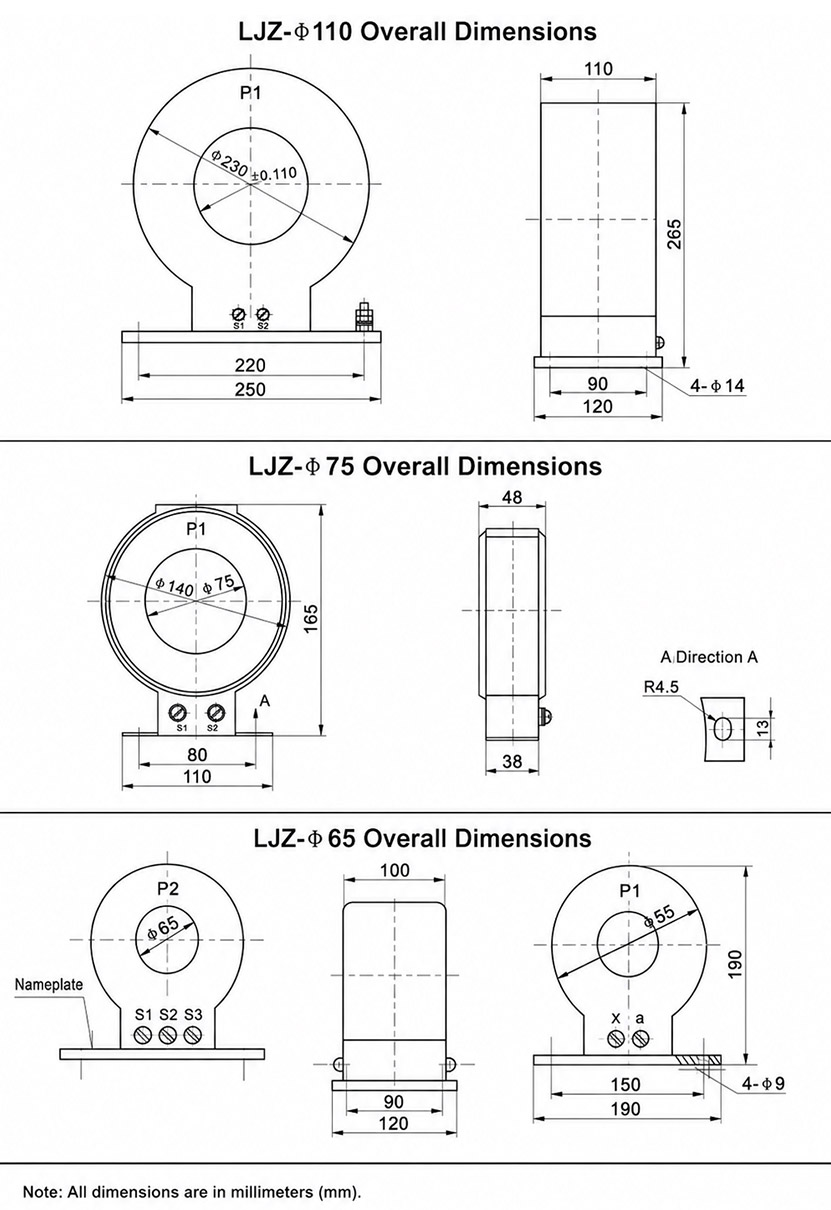
The LJZ series cast-resin zero sequence current transformer is installed by passing all three phase conductors through the central window of the annular core in the same direction. The transformer is securely mounted to a base or panel using the provided mounting holes. Ensure the cable group fits within the selected aperture without excessive bending or mechanical stress, and keep the cables centered in the window for optimal performance.
Selection & FAQs
Selection Guide
- Confirm the small-current grounding scheme, target earth-fault sensitivity, relay type, coil connection, and trip setting.
- Select the 65mm, 75mm, 110mm, or 150mm aperture from the complete three-phase cable bundle.
- Match the model-specific ratio and sensitivity to the DD-11/60 relay or equivalent protection input.
- Determine whether series/parallel relay coils or a compensation capacitor are required by the protection study.
- Verify cable-screen routing, secondary terminals, wiring resistance, fixed mounting, grounding, and commissioning tests.
Frequently Asked Questions
Q1: What is the LJZ φ65/75/110/150 series used for?
It detects low residual current for cable earth-fault protection in indoor systems up to 35kV.
Q2: Which aperture sizes are available?
Solid cast-resin models are available with 65mm, 75mm, 110mm, and 150mm cable windows.
Q3: What earth-fault sensitivity can be achieved?
Published references range from about 1A to 6A, depending on model, relay-coil connection, capacitor, and setting.
Q4: Which relay can be used?
The technical data references DD-11/60 earth-fault relays; equivalent relays require engineering confirmation.
Q5: Why are series and parallel coil connections listed?
Changing the relay-coil connection alters the effective scale and sensitivity, allowing coordination with the grounding scheme.
Q6: When is a compensation capacitor required?
Use it only when specified by the relay and protection design to improve sensitivity or compensate the secondary circuit.
Q7: What conductor-routing rule is critical?
All protected phase cables must pass through the window together, while screens and grounding conductors follow the approved scheme.